

Table of Contents
- Why Functional 3D Prints Work So Well in Small Apartments
- Space-Saving 3D Prints That Earn Their Square Footage
- 3D Printed Drawer Organizers for Kitchens and Bathrooms
- 3D Prints for Renters: Damage-Free Mounting That Comes Off Clean
- 3D Printed Cable Management for Desks and Nightstands
- Conclusion
- Frequently Asked Questions
Last Updated: October 12, 2026
Why Functional 3D Prints Work So Well in Small Apartments
Functional 3D prints solve a problem off-the-shelf organizers cannot: they fit your space exactly. A drawer 2 centimeters too wide or a shelf gap no store-bought bin matches means wasted room.
This guide from CamGait3D Creations covers seven space-saving ideas, from drawer dividers to damage-free wall mounts, each replacing clutter with something that holds, stores, or organizes.
Small-space storage rewards precision: a printed organizer that fits a 30-by-20-centimeter drawer uses every millimeter, while a store-bought tray leaves gaps. The ideas below focus on what matters in a rental: custom fit, removable mounting, and prints that last.
Space-Saving 3D Prints That Earn Their Square Footage
The best space-saving 3D prints share one trait: they replace something bulkier or nothing at all, a drawer organizer for a jumbled pile, a wall hook for floor clutter, a phone stand for a stack of books.

Here are the everyday problem-solving prints worth the shelf space:
- Drawer dividers that split a single drawer into labeled zones
- Under-shelf brackets that add a second layer inside a cabinet
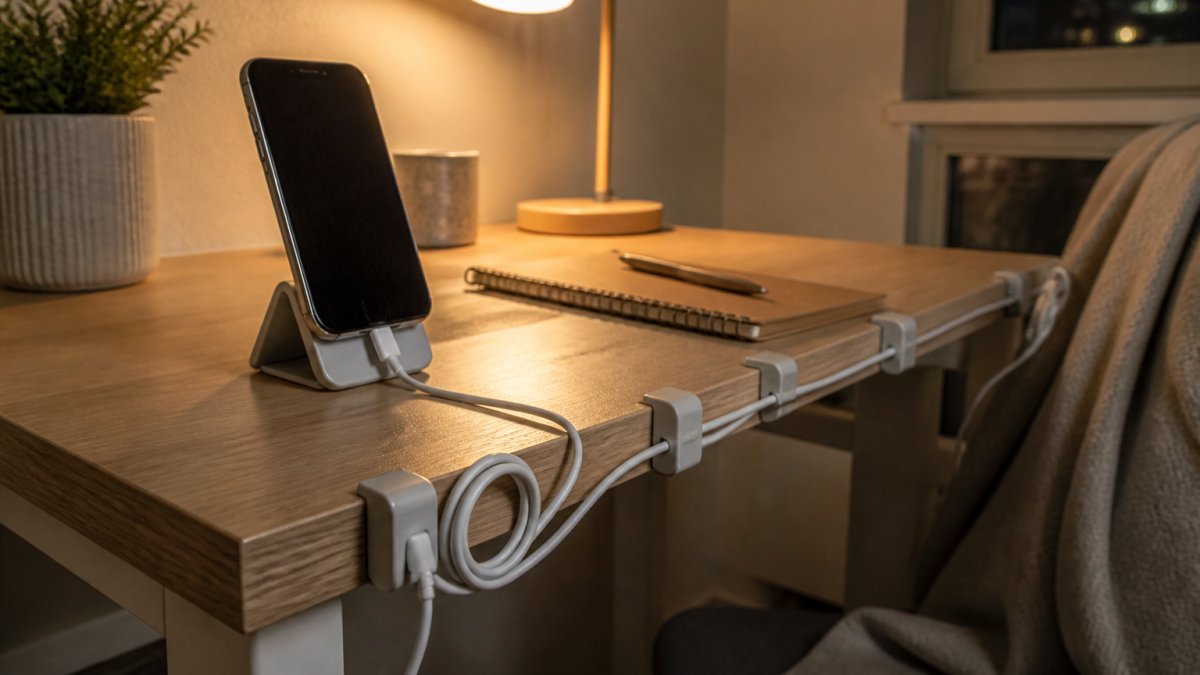
- Cable clips that keep charging cords off the floor
- Wall hooks for keys, bags, and headphones
- Stackable bins that turn vertical air into storage
Each is small, cheap to print, and easy to replace when needs change.
Measure Twice: Fit Checks Before You Print
Measure the opening, not the object: a drawer's internal width is narrower than its outer face, and shelves lose height to hinges and lips. Record internal width, depth, and height, then subtract 2 to 3 millimeters from each so the part slides in without jamming. For wall-mounted items, check stud placement or use a removable adhesive rated for the weight.
3D Printed Drawer Organizers for Kitchens and Bathrooms
3D printed drawer organizers turn one cluttered drawer into defined zones: utensils, wraps, and small tools in a kitchen; razors, hair ties, and travel bottles in a bathroom. The advantage over store-bought trays is the fit, a printed organizer follows the drawer's exact shape, including the handle notch or rear taper, reclaiming dead space a rectangular tray leaves behind.
Sizing a Drawer Organizer That Actually Fits
Measure the drawer's internal width, depth, and height, then subtract 2 to 3 millimeters from each so the tray drops in without binding.
A common pattern is a 2-inch grid: a 20-inch drawer holds ten 2-inch columns, so you can swap a utensil tray for a wrap tray without reprinting the set. Labeled zones cut search time, and a lid or stacked insert adds a second layer in a shallow drawer.
Print Settings and Cost for Daily-Wear Trays
Drawer organizers take daily wear, so wall thickness and infill matter more than speed. Start with 3 to 4 perimeters and 15 to 20 percent infill in PETG: a 6-by-4-inch tray uses 40 to 70 grams of filament and prints in 2 to 4 hours on a 0.4 mm nozzle at 0.2 mm layer height.
A common mistake is printing paper-thin to save time, then watching walls flex under silverware. Thicker walls and slightly higher infill cost a little more filament but hold their shape for years.
Bathroom and Toilet-Area Organizing
The toilet area is the hardest spot in a small apartment to keep tidy: tight floor space, wet surfaces, everything within arm's reach.
📱Cell Phone Stand with Anti-Skid Rubber Feet →
Bathroom prints need different choices than kitchen ones. Moisture and warmth favor PETG over PLA, and anything near the shower should drain rather than pool water, so add weep holes or an open-grid base.
For a spooky twist on a bathroom staple, CamGait3D Creations makes a coffin-shaped tissue box holder that turns a plain tissue box into decor. It is a practical item that happens to look like a conversation piece.
3D Prints for Renters: Damage-Free Mounting That Comes Off Clean
3D prints for renters work best when they hang without a single hole in the wall. Security deposits and lease terms make permanent mounting a bad idea, so aim for a hold that releases cleanly.
Three renter-safe approaches cover most needs:
- Adhesive hooks and strips rated for the item's weight, pressed onto a clean, dry surface
- Over-the-door brackets that hook onto a cabinet or closet door with no hardware
- Tension-fit parts that wedge into a gap, like a shelf or a window frame, and rely on pressure
Weight decides the mount: a printed cable clip or key hook suits an adhesive strip, a shelf holding books does not. Match the mount to the load and test with a light pull before trusting it.
3D Printed Cable Management for Desks and Nightstands
(/products/fantasy-castle-book-nook-bookmark-holder) that doubles as a bookmark holder turns a row of paperbacks into a small scene.For readers who want a shelf that looks lived-in, CamGait3D Creations offers pieces like the Hobbit Reading Bookend & Flower Vase, a three-in-one bookend, vase, and desk organizer at $30.00, and the Fantasy Castle Book Nook & Bookmark Holder, a castle-shaped shelf piece that keeps bookmarks close at $28.00.


Conclusion
Filling a small apartment with things that fit, hold, and come off the wall cleanly is the whole game. Every organizer that matches your drawer, every clip that tames a cable, and every shelf piece that decorates while it stores is one less thing fighting for space.
CamGait3D Creations prints functional and decorative pieces in-house, from the Cell Phone Stand with Anti-Skid Rubber Feet to the Thumbstone Village Book Page Holder. Each piece is 3D printed with attention to detail, so it holds up to daily use and looks good doing it. Shop all of our designs and find the pieces that fit your space.
Frequently Asked Questions
What are the most useful things to 3D print for an apartment?
Start with items that solve a daily annoyance: a desk phone stand, drawer dividers, cable clips, and small shelf organizers. These functional 3D prints take up little space but remove clutter from counters and nightstands. Pick two or three problems you notice this week, then print for those first.
What 3D-printed items help save space in a small apartment?
Space-saving 3D prints work best when they stack, nest, or mount. Drawer organizers turn a single messy drawer into several usable zones. Wall-mounted holders move clutter off counters, and vertical stands keep phones and tablets upright instead of lying flat. Before printing, measure the shelf, drawer, or counter area you want to reclaim, then check the model dimensions against that gap. A print that fits the exact space beats a generic one every time.
Can you 3D print custom organizers for drawers and cabinets?
Yes, and this is where 3D printing beats store-bought bins. You measure the drawer's inside length, width, and depth, then scale the model to match. Print one test piece first to confirm the fit before committing to a full set, since a few millimeters of error adds up across multiple inserts.
What are easy 3D prints for renters?
Renter-friendly 3D prints avoid screws and permanent adhesives. Cable clips that grip a desk edge, over-the-door hooks, shelf dividers that rest in place, and freestanding phone stands all come off without leaving holes or residue. Command-strip-compatible mounts and tension-fit brackets also work well. Check your lease for rules on wall damage before mounting anything, and test any adhesive on a hidden spot first. Removable beats permanent when you may move within a year.
What filament is best for functional household 3D prints?
PLA works for decorative pieces and light-duty items kept away from heat, like bookends or page holders. PETG handles more stress and slight flex, making it a better choice for drawer organizers, cable clips, and tool holders. For anything touching food or held often, check the filament manufacturer's safety documentation. Match the material to the load and the room, not to what's already on your shelf.